 MASSIV
4-Day Dumbbell-Only Workout Plan With Progression
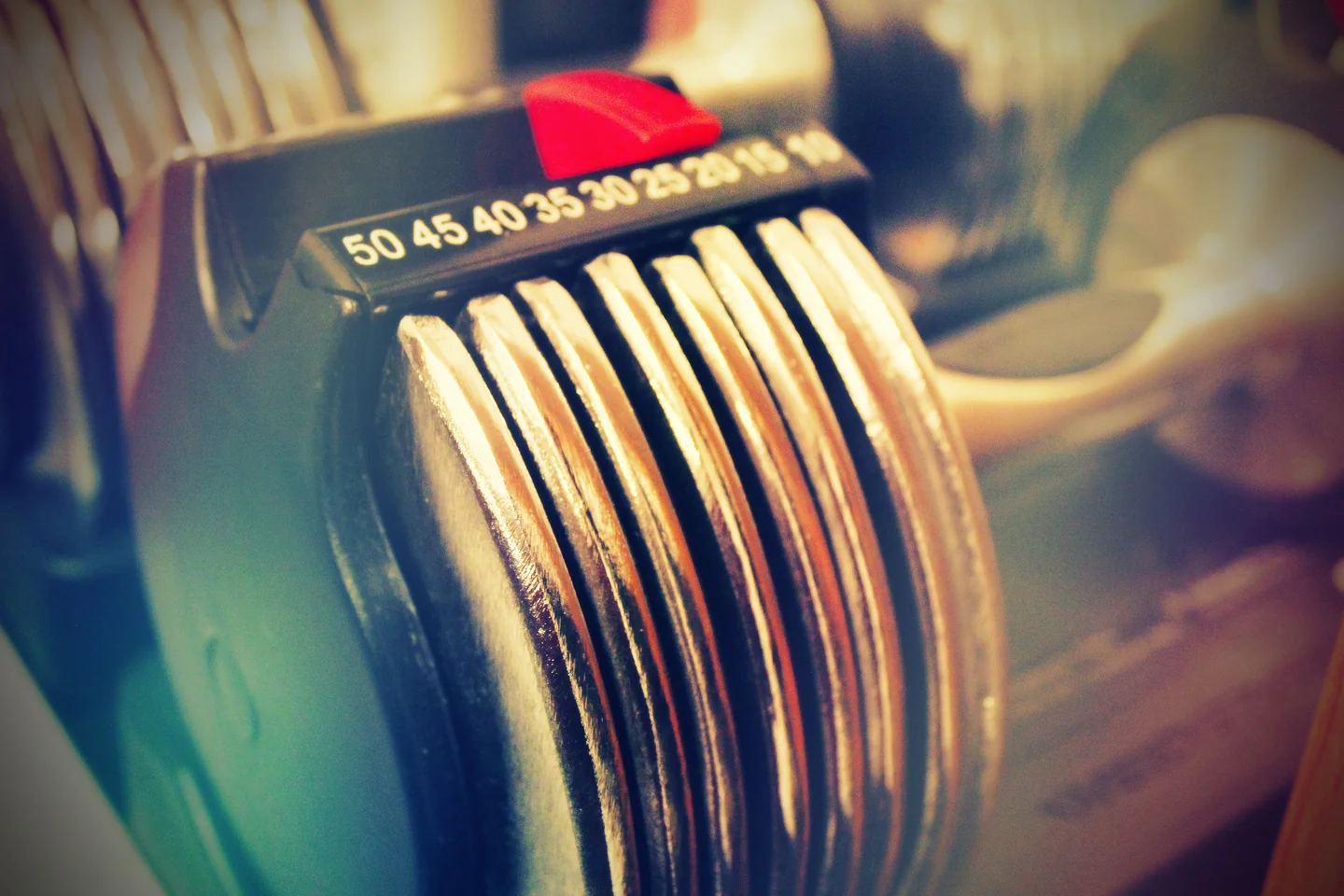
This 4-day dumbbell-only workout plan uses an upper/lower split: Upper A, Lower A, Upper B and Lower B. You need adjustable dumbbells or several fixed pairs; a bench is useful but optional because each bench exercise has a floor-based substitute. The progression rule is simple: add reps within the listed range, then increase the load only after every set reaches the top of that range.
Who this is for (and what you need)
This program suits home-gym lifters, travellers, and anyone training around a single set of dumbbells. You'll get the most out of it with adjustable dumbbells (or enough fixed pairs to change weight), since progression depends on being able to add load. A bench is strongly recommended — it roughly doubles your exercise options — but the program includes floor-based substitutions if you don't have one.
It is an upper/lower split run four days a week, so each major muscle group is trained twice. That matches the 2026 ACSM guidance to train all major muscle groups at least twice per week, while keeping each session short enough for a home setup.
The 4-day program
Run it as Upper / Lower / rest / Upper / Lower / rest / rest, or any four days with at least one rest day between repeats.
Day 1 — Upper A
- Dumbbell bench press — 4 × 8–12
- One-arm dumbbell row — 4 × 8–12 per side
- Seated dumbbell shoulder press — 3 × 8–12
- Chest-supported or bent-over reverse fly — 3 × 12–15
- Dumbbell curl — 3 × 10–15
- Overhead or lying dumbbell triceps extension — 3 × 10–15
Day 2 — Lower A
- Dumbbell goblet squat — 4 × 8–12
- Dumbbell Romanian deadlift — 4 × 8–12
- Walking or reverse lunge — 3 × 10–12 per leg
- Dumbbell hip thrust (or glute bridge) — 3 × 12–15
- Standing dumbbell calf raise — 4 × 12–20
Day 3 — Upper B
- Incline dumbbell press — 4 × 8–12
- Dumbbell pullover or two-arm row — 4 × 10–12
- Dumbbell lateral raise — 4 × 12–20
- Hammer curl — 3 × 10–15
- Dumbbell skull crusher or kickback — 3 × 12–15
Day 4 — Lower B
- Bulgarian split squat — 4 × 8–12 per leg
- Dumbbell stiff-leg or single-leg RDL — 4 × 10–12
- Dumbbell step-up — 3 × 10–12 per leg
- Dumbbell glute bridge — 3 × 15–20
- Seated calf raise (dumbbell on knee) — 4 × 15–20
How to progress with only dumbbells
This is where most dumbbell routines fall apart. With a barbell you add 2.5–5 lb a session; dumbbells jump in bigger, clumsier increments (often 5 lb per bell — 10 lb total), so you can't just "add weight" every time. Instead, progress with double progression:
- Pick the rep range for the exercise (say 8–12).
- Stay at the same weight until you can hit the top of the range for all sets (e.g., 4 × 12).
- Then increase the dumbbells one step. Your reps will drop back toward the bottom of the range (e.g., 4 × 8).
- Climb back up to the top, and repeat.
Double progression makes fixed equipment workable because you add reps between weight jumps. If the next pair is too heavy after you have reached the top of the range, use a smaller add-on weight if your equipment supports it or choose a harder variation that preserves good technique. Pauses and slower eccentrics can increase difficulty, but they are exercise variations—not substitutes for tracking reps and load indefinitely.
Common mistakes
No progression plan. Doing "a dumbbell workout" with whatever weight feels right, forever. Pick rep ranges and use double progression — that's the difference between training and just exercising.
Going too heavy and losing the range. If you jump weight and crash below the bottom of your rep range, the jump was too soon. Earn the top of the range first.
Skipping the lower days. Dumbbell leg training feels less impressive than a loaded barbell, so people quietly drop it. Split squats and RDLs with challenging dumbbells absolutely build legs — don't skip them.
Changing tempo and rest every session. Keep technique and rest reasonably consistent so your log is comparable. If you deliberately switch to a paused or slower variation, treat it as a new variation and establish a new baseline.
No bench? Substitutions that still work
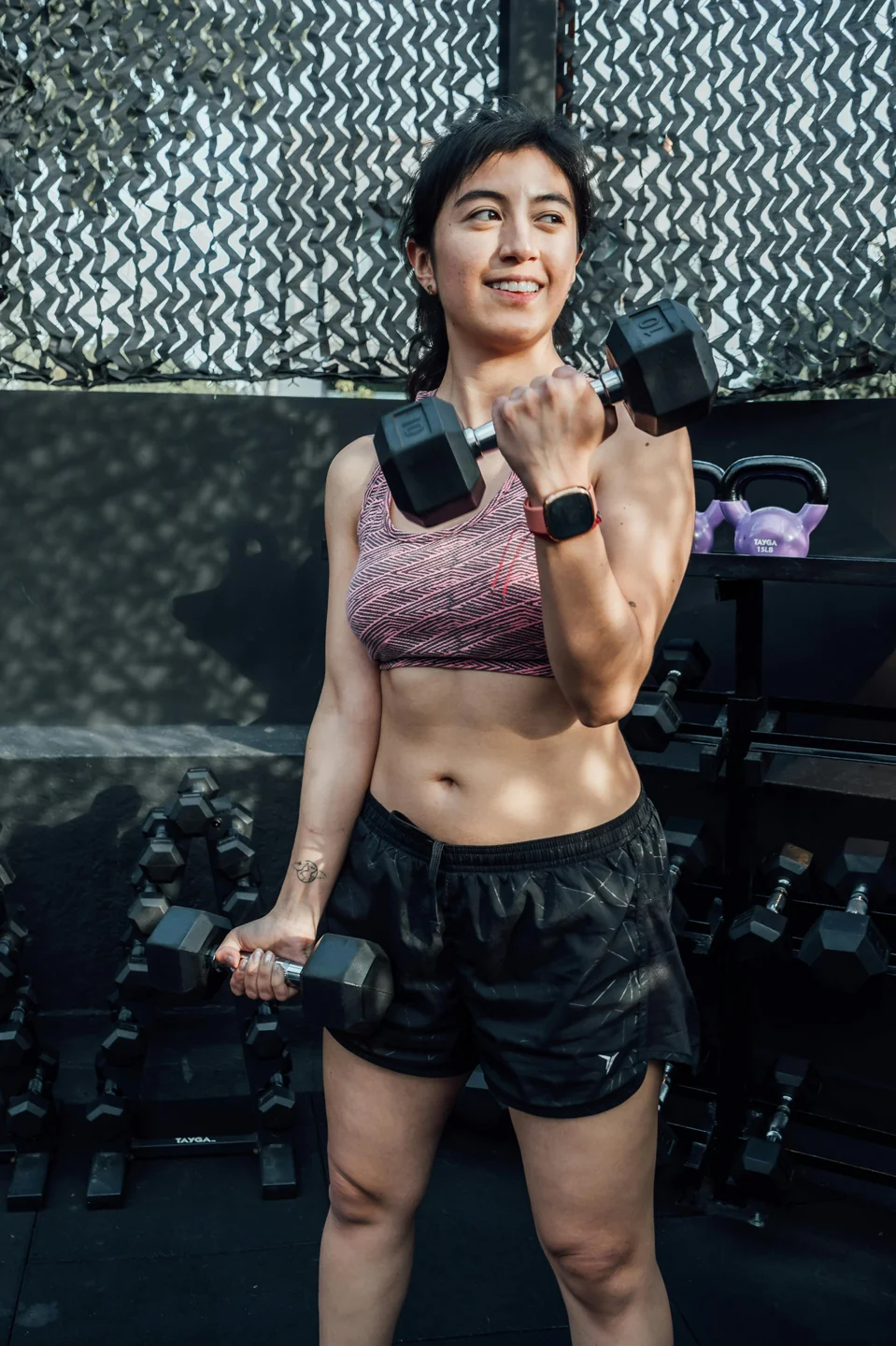
A bench roughly doubles your options, but you can run the whole program from the floor:
- Dumbbell bench press → floor press. Lie on the floor and press; the floor limits your range slightly but it's a genuine chest and triceps builder.
- Incline press → standing or seated dumbbell overhead press. Hits the upper chest and shoulders without an adjustable bench.
- Bench-supported row → chest-supported alternative or strict bent-over row. Brace hard and keep your back flat.
- Step-ups / Bulgarian split squats → reverse lunges and floor-based single-leg work. A low, sturdy surface (a step or sturdy chair) covers most of the gap.
The one thing you can't fake is load — if the dumbbells get easy and you have no heavier option, the substitutions above plus higher reps and slower tempo carry you a long way before equipment becomes the real ceiling.
How heavy do your dumbbells need to be?
There is no single correct top weight because a row, split squat, lateral raise and curl require very different loads. Your dumbbells are heavy enough for an exercise when the listed rep range brings you close to failure with good technique, and light enough when you can still complete the bottom of the range. Research finds that a broad range of loads can build muscle when effort is sufficient; the practical limit arrives when you exceed the top of the rep range and have no heavier load or meaningfully harder variation.
A quick warm-up
You don't need much, but cold heavy presses and split squats are a bad idea. Two or three minutes of easy movement (arm circles, bodyweight squats, a light set of the first exercise) is enough to get blood moving and groove the pattern. Do one or two lighter "feeler" sets of your first exercise before your working weight, then get to work.
Running it 3 days a week instead of 4
If four days is too many, fold the program into three full-body days by mixing upper and lower work each session: e.g. Day 1 (press, squat, row), Day 2 (overhead press, RDL, lunge), Day 3 (incline press, split squat, row), then rotate. Each muscle still gets hit 2–3× across the week. The exercise pool and the double-progression rule don't change — you're just repackaging the same work into fewer, slightly longer sessions.
A worked progression example
Illustrative example: say you're doing dumbbell bench press for 4 × 8–12 with 40 lb dumbbells:
- Week 1: 12, 11, 9, 8 reps — you're inside the range but not at the top on every set. Stay at 40.
- Week 2: 12, 12, 11, 10 — getting there. Stay at 40.
- Week 3: 12, 12, 12, 12 — top of the range on all sets. Earned the jump.
- Week 4: move to 45 lb → 9, 9, 8, 8. Reps dropped but remain inside the 8–12 range. Now climb back to 4 × 12 and repeat.
That's the whole engine. It feels slow week to week and adds up to real strength and size over months — and it's the part a random "dumbbell workout" off social media never gives you.
A few common questions
Can I build real muscle with just dumbbells? Yes. Muscle responds to tension, effort, and progression — not to a specific implement. Plenty of impressive physiques are built with dumbbells and a bench.
What about a back/pulling movement without a pull-up bar? Rows are your main pulling work here. If you have any bar to hang from, add chin-ups; if not, heavy one-arm rows and dumbbell pullovers cover the back well.
How do I add conditioning? Dumbbell complexes or carries at the end of a session (e.g. a few rounds of farmer's carries) add conditioning without extra equipment. Keep them short so they don't eat into recovery.
How Massiv handles this for you
The four-day upper/lower plan above is an example you can follow with any logbook; it is not a built-in Massiv program. Massiv does include three-day dumbbell programs such as DB Essentials and Dumbbell PPL. You can record the four-day plan manually, or build it as a custom program with Pro. Set up the dumbbells you own so suggested loads stay within your available weights. Compare the built-in dumbbell plans.
Keep a record of every set and weight jump. Use a built-in dumbbell plan, or build this four-day example as a custom program with Pro.
Download Massiv →A pair of adjustable dumbbells and a bench is enough to build a genuinely good physique — the equipment was never the limiting factor. Run the four days, use double progression to keep the work getting harder, and don't skip leg day just because there's no barbell.
Source
Frankoman's Dumbbell Only Split, included in Massiv, originated on the lifting forums and is hosted at Muscle & Strength. Massiv is not affiliated with or endorsed by its author.