 MASSIV
Glute Hypertrophy Program: 4 Days, Full Gym
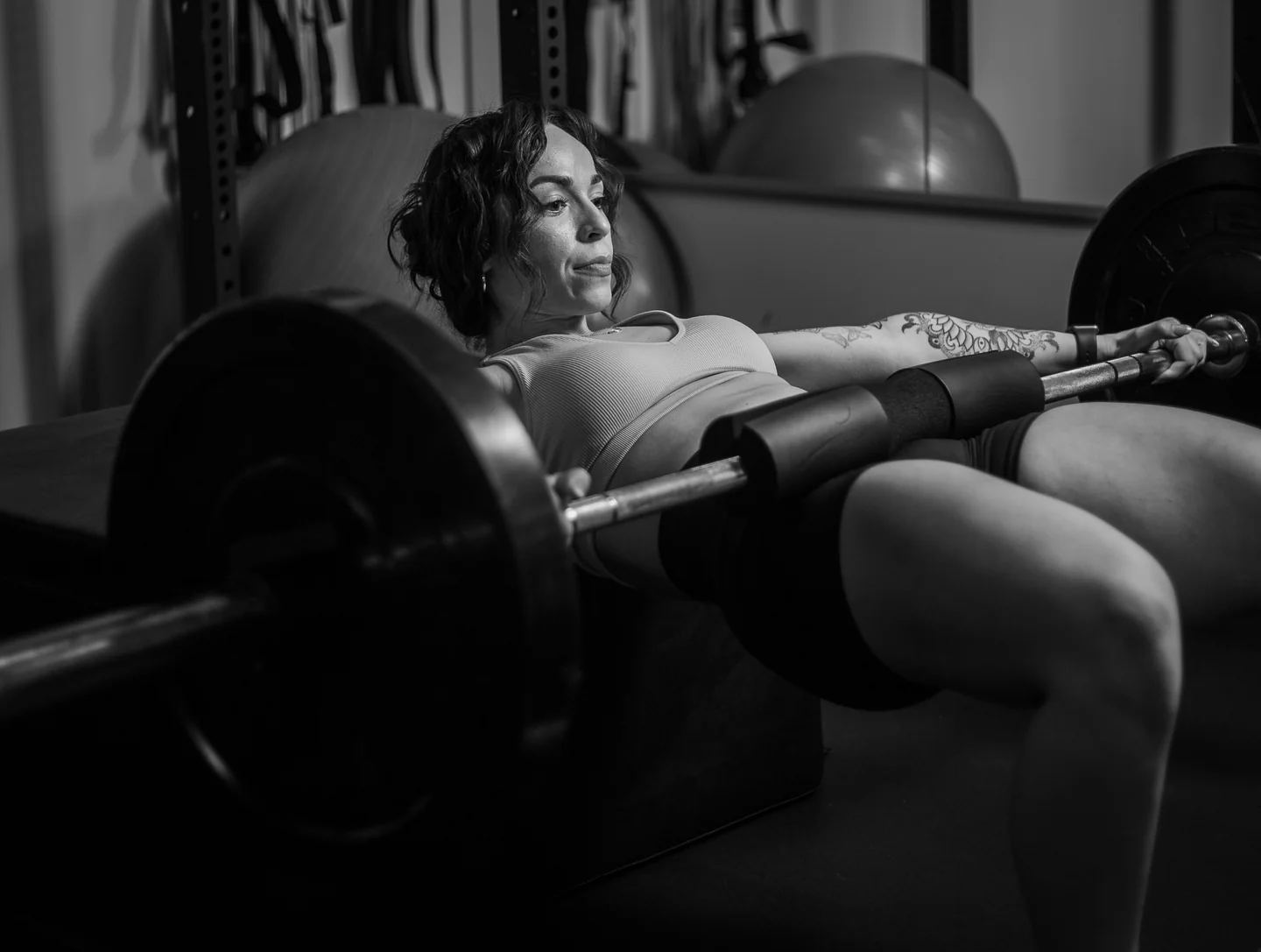
Growing your glutes isn't about endless band walks and a different "booty burn" circuit every week — it's about training the muscle through a full range of motion, with enough load, and adding to that load over time. This glute program is a 4-day, full-gym plan built around the three jobs the glutes actually do (hip extension, abduction, and external rotation), with concrete sets, rep ranges, and progression targets so you're not guessing. It's structured for real hypertrophy, not just a pump.
How glute training actually works
The glutes have three muscles — gluteus maximus, medius, and minimus — and they respond to three movement patterns you need to cover to develop the whole region:
- Hip extension (hip thrusts, RDLs, back extensions) — the biggest driver of glute max growth.
- Hip abduction (machine abduction, banded work) — targets the medius/minimus for the "upper shelf" and side roundness.
- Deep hip flexion under load (deep squats, lunges, Bulgarian split squats) — trains the glutes at long muscle lengths, which research suggests is especially effective for growth.
A program that only thrusts, or only squats, leaves part of the muscle behind. The plan below deliberately rotates all three. This is a hypertrophy program, so it's about training the glutes twice a week with progressive overload — the same principle behind any muscle-building plan, applied with glute-biased exercise selection.
The 4-day glute-focused program
Two dedicated lower/glute days plus two upper days, so the glutes get direct work twice weekly with recovery between. Run it Lower / Upper / rest / Lower / Upper / rest / rest.
Day 1 — Glute-Focused Lower (thrust emphasis)
- Barbell hip thrust — 4 × 6–10 (primary — go heavy)
- Romanian deadlift — 4 × 8–12
- Walking lunge — 3 × 10–12 per leg
- Hip abduction (machine) — 3 × 15–20
- Cable kickback — 3 × 12–15 per side
Day 2 — Upper A
Press, row, and shoulder/arm work to keep the physique balanced (3–4 sets, 8–12 reps each). A strong upper back and shoulders frame the look the glute work is building toward.
Day 3 — Glute-Focused Lower (squat & long-length emphasis)
- Bulgarian split squat — 4 × 8–10 per leg (primary — deep range)
- Deep goblet or heel-elevated squat — 4 × 8–12
- 45° hip extension / back extension — 3 × 12–15
- Single-leg hip thrust or glute bridge — 3 × 10–12 per leg
- Hip abduction (seated or banded) — 3 × 20–25
Day 4 — Upper B
A second upper session with different angles (incline press, vertical pull, lateral raises) for 3–4 sets of 8–15.
How to progress
The exercises only grow the muscle if the work gets harder over time. Use double progression on every glute movement:
- Stay at a weight until you can hit the top of the rep range on all sets (e.g. 4 × 10 on hip thrusts).
- Add weight; reps drop to the bottom of the range (4 × 6).
- Build the reps back up, then add weight again.
On the heavy hip thrust, add load aggressively — it's one of the most loadable exercises in the gym and your glutes can handle real weight. On abduction and kickback work, prioritize controlled reps and a hard squeeze over piling on plates; chasing weight there just turns it into momentum.
Common mistakes
All thrusts, no long-length work. Hip thrusts are excellent but train the glutes in a shortened position. Deep squats and split squats load the glutes stretched — you want both.
Junk volume over progression. Endless banded mini-exercises feel like work but rarely overload. A handful of hard, progressively heavier sets beats 40 minutes of burn circuits.
Never adding weight. The glutes are a large, strong muscle. If your hip thrust weight looks the same as three months ago, that's why they haven't changed.
Neglecting abduction. The "upper-side" roundness comes largely from the medius/minimus. Skipping abduction work leaves that area flat no matter how much you thrust.
Cutting calories too hard. Building muscle needs adequate protein and at least maintenance calories. You can't grow glutes meaningfully in a steep deficit.

Technique that makes or breaks each lift
Glute exercises are unusually easy to turn into something else — a hip thrust becomes a quad press, an RDL becomes a back exercise. A few cues keep the tension where you want it:
Barbell hip thrust. Plant your upper back on the bench, tuck your chin, and drive through your heels until your torso and thighs form a straight line — then squeeze hard at the top for a beat. Don't hyperextend your lower back to "get higher"; the rep ends when your hips are locked out, not when your spine arches. Posterior pelvic tilt at the top (think "ribs down, tailbone up") is what shifts the work from lower back to glutes.
Romanian deadlift. Push your hips back, not down, with soft knees, and feel the stretch travel up your hamstrings into your glutes. Stop the descent when your hips stop moving back — chasing the floor just rounds your spine. The glute does its biggest work at the bottom stretch and the lockout.
Bulgarian split squat. Lean your torso forward slightly and let your front knee travel over your toes into a deep range — that forward lean and depth bias the glute over the quad. Keep most of your weight through the front heel.
Hip abduction. Lean forward in the machine to bias the upper glutes, move slowly, and hold the end position. This is a squeeze-and-control movement, not a load-and-swing one.
How much volume you actually need
Hypertrophy responds to the number of hard sets you do per muscle per week. For glutes, somewhere around 10–20 hard sets a week is a productive range for most people — the program above lands there once you count thrusts, RDLs, split squats, and abduction work across the two lower days. More isn't automatically better; junk sets you can't recover from don't grow anything.
Take most working sets to within 1–3 reps of failure (a couple of reps in reserve). On the big compounds like hip thrusts you can push closer to failure on the last set; on knee-flexion-heavy work like split squats, leave a little more in the tank so technique doesn't fall apart. If you're consistently failing mid-set or your reps crater week to week, that's a sign you've overshot volume or intensity and recovery isn't keeping up.
An 8-week sample progression
You don't change the exercises every week — you change the numbers. Here's how the heavy hip thrust might progress over a block using double progression (4 sets, 6–10 rep range):
| Weeks | Hip thrust | What you're doing |
|---|---|---|
| 1–2 | 4 × 6–8 | Settle on a weight you can control for 6–8 clean reps |
| 3–4 | 4 × 8–10 | Same weight, add reps until you hit 10 on every set |
| 5 | Add load → 4 × 6–7 | Bump the bar; reps reset to the bottom of the range |
| 6–7 | 4 × 8–10 | Build the reps back up at the heavier weight |
| 8 | Light/deload | Cut volume ~40% to recover, then start the next block heavier |
Apply the same logic to every lift in the program. The point is that progress is tracked and deliberate — you're beating last week's numbers, not just doing "a glute workout."
A few more questions
Will this make my legs bulky? The program biases the glutes, but compound lower-body work does train the quads and hamstrings too — that's a feature, not a flaw, and it's what builds an athletic lower body. You won't accidentally add size you didn't train hard and eat for.
Do I need to feel a glute "pump" to know it worked? A pump is pleasant but not the goal. Progressive overload over weeks grows muscle; the burn in a single session doesn't. Track your weights, not your soreness.
Can I add extra glute work on upper days? A few sets of abduction or a light hip thrust on an upper day is fine if you recover well, but don't turn every session into glute day — recovery is where the muscle actually grows.
How long until I see change? Visible glute hypertrophy typically takes a few months of consistent, progressing training plus adequate protein and calories. Eight to twelve weeks of honest work is a fair first checkpoint.
How Massiv handles this for you
Glute growth is a progression problem dressed up as an exercise-selection problem — the results come from adding load and reps to the right movements, session after session, and actually tracking it. Massiv ships a Glute Aesthetics program as a built-in, loads each session for you, carries your hip thrust and split-squat numbers forward, and tells you when you've earned the next jump via double progression — so you train the muscle hard instead of managing a spreadsheet.
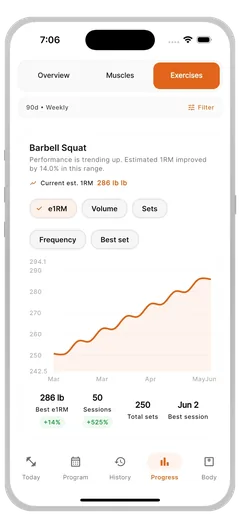
Massiv runs the progression math for this program automatically. Download Massiv and put it to work in the gym.
Download Massiv →Glutes grow the same way every muscle does: enough load, a full range of motion, and progressive overload across all three movement patterns. Run the four days, push the heavy hip thrusts and deep split squats, add weight when you earn it, and give it a few months — the structure does the rest.