 MASSIV
Fitbod Alternative: Structured Programs With a Useful Free Tier
Fitbod generates a new workout for you each session, which is the whole appeal and the whole problem — you never run the same plan twice, so there is nothing to progress. If you want a named program with visible progression rules instead of an algorithm's suggestion, Massiv includes 17 free, rounds every weight to plates you own, and imports your Fitbod history.
Fitbod’s pitch is genuinely appealing: open the app and get a workout adapted to your goals, history, equipment, and recovery. A Fitbod alternative makes sense when you want something different—not because adaptive training is inherently bad, but because you would rather follow a repeatable named program with visible progression rules, use a less expensive plan, or keep more of the experience free. This guide explains that tradeoff and how to switch without discarding your training history.
Why people look for a Fitbod alternative
- The cost. Fitbod’s official web pricing is currently $15.99/month or $95.99/year, with prices varying by region, promotion, platform, and store.
- Adaptive variety versus a fixed program. Fitbod says its algorithm mixes exercises over time while using your history and feedback to favor movements you perform consistently. That is useful if you want variety; a named program is clearer if you want the same main lifts and predetermined rules week after week.
- Different kinds of control. Fitbod lets you replace exercises, change preferences, and save workouts. A program-led app instead asks you to choose a plan, then keeps the session inside that plan’s progression model.
None of this makes Fitbod bad. It makes it a particular tool — great if you want decisions made for you, frustrating if you want to run a structured plan and watch specific numbers climb.
Is Fitbod worth it?
Be honest about which lifter you are:
- Fitbod is worth it if you genuinely don't want to choose a program, you value variety and convenience over chasing PRs, and the monthly cost doesn't bother you.
- You want an alternative if you would rather follow a named program, progress the same lifts on visible rules, or use a useful free tier with lower-cost optional upgrades.
What to look for instead
If you're leaving for the second reason, the alternative should give you the structure Fitbod's algorithm replaces:
- Real, named programs — proven templates (5/3/1, PHUL, PPL, GZCLP) rather than a fresh algorithmic guess each day.
- Automatic progression you can see — the app advancing your weights on clear rules, so overload is deliberate, not random.
- Consistent main lifts — the same key movements week to week, so progress is measurable.
- A transparent price — with a free tier or paid plan whose limits match the automation you need.
- History import — so leaving Fitbod doesn't mean abandoning your data.
If you do still want "pick a program for me," look for an app with a guided onboarding that matches you to a real program once — then runs it — rather than re-rolling your workout every session.
Fitbod picks your workout for you. Massiv runs the program you chose and shows you the rule behind every weight change — all 17 included free.
Get Massiv free →Don't lose your Fitbod history
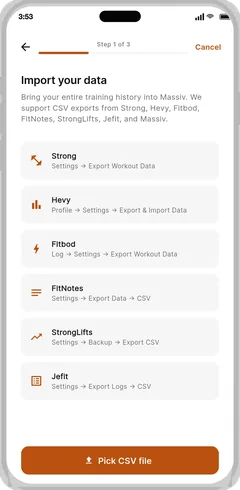
Switching should not cost you your logged workouts. Check the destination app’s import instructions before subscribing. Massiv supports history imports from Strong, Hevy, Fitbod, StrongLifts, FitNotes, and Jefit; its current platform and pricing choices are summarized on the download page.

How Massiv handles this for you
Massiv is built for the lifter who wants structured programs and a useful free tier. Instead of generating the next session from a recommendation algorithm, it offers 17 built-in programs, loads today’s workout, and advances weights on rules you can see and override. Free includes the built-in programs, workout history, watch logging, imports, exports, and a 30-day progression preview; optional Pro keeps automatic progression active and adds the program builder and deeper analytics. Its onboarding can also match you to a program, and it imports Fitbod history.
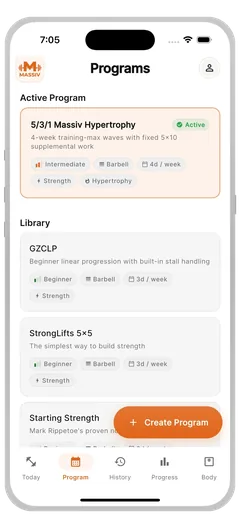
Prefer a repeatable program to an adaptive daily recommendation? Choose a built-in plan in Massiv and preview its automatic progression free for 30 days.
Download Massiv →If you value adaptive recommendations and exercise variety, Fitbod may remain the better fit. If you prefer a named program, visible rules, and a useful free tier, choose an alternative built around that structure—and confirm your history can move before you switch.