 MASSIV
Push/Pull/Legs (PPL) Split: A Complete Guide
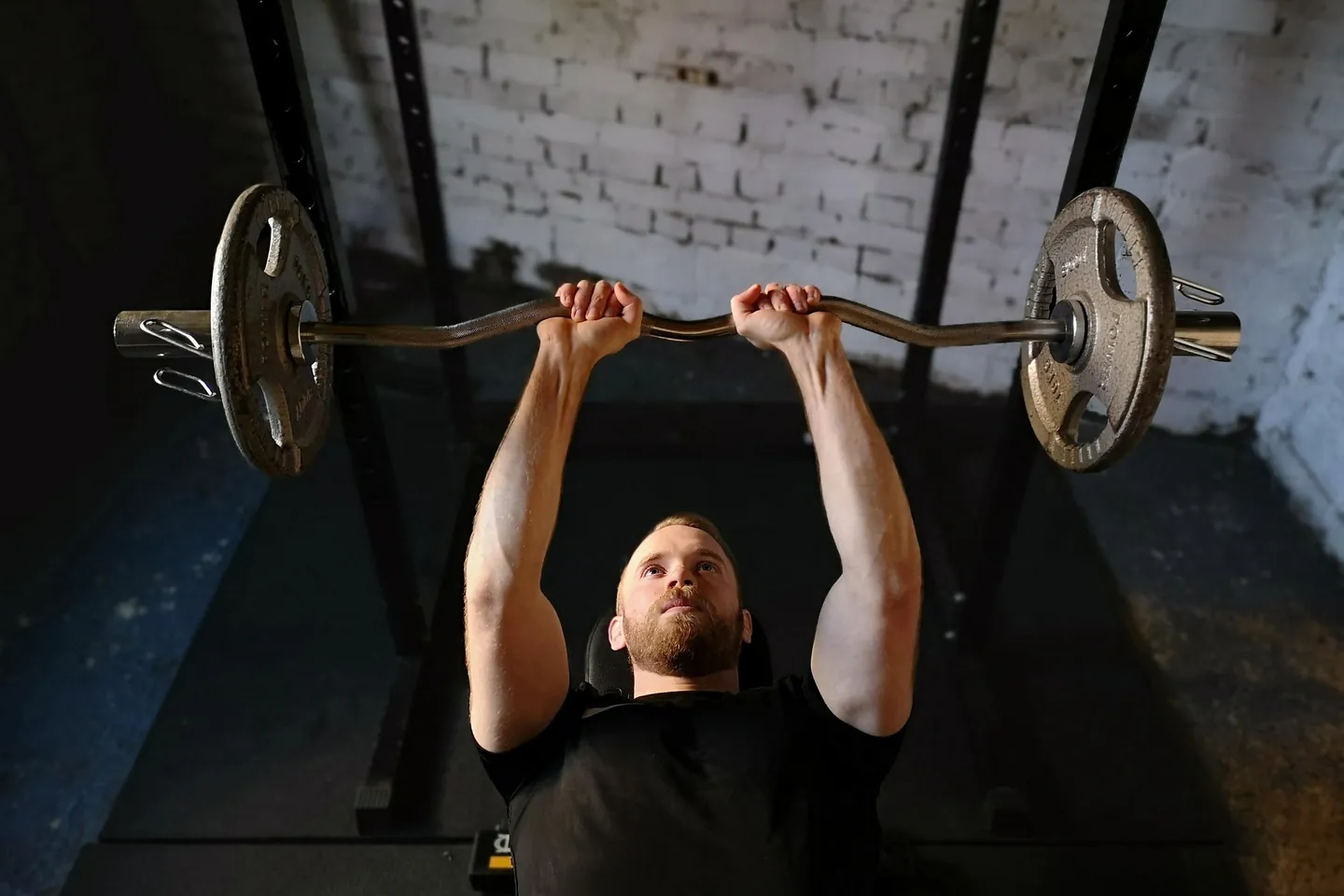
Push/Pull/Legs is the most popular training split in the gym, and for a good reason: it groups muscles by the movement they share, so everything you train in a session works together and recovers together. It scales cleanly from three days a week to six, which makes it a split you can run for years by just changing the frequency. This guide covers what PPL is, the full schedules, sample sessions, exactly how to progress it — and the mistakes that quietly stall people.
What is the Push/Pull/Legs split?
PPL divides your training into three session types by movement pattern:
- Push — the muscles that push: chest, shoulders, triceps. (Bench, overhead press, dips, pressdowns.)
- Pull — the muscles that pull: back and biceps. (Rows, pulldowns, pull-ups, curls.)
- Legs — everything below the waist: quads, hamstrings, glutes, calves. (Squat, deadlift or hinge, leg press, calf work.)
The logic is that muscles working a push session all assist each other — your triceps and front delts are already warm when you press — so you train them together and then leave them alone to recover while you train pull and legs. That clean separation is why PPL feels less beat-up than splits that hit the same muscle on back-to-back days.
The schedule: 6-day vs 3-day
The split itself never changes — you just repeat the three sessions more or less often:
| Day | 6×/week (PPLPPL) | 3×/week (PPL) |
|---|---|---|
| Mon | Push | Push |
| Tue | Pull | Rest |
| Wed | Legs | Pull |
| Thu | Push | Rest |
| Fri | Pull | Legs |
| Sat | Legs | Rest |
| Sun | Rest | Rest |
The 6-day version trains each muscle twice a week — high frequency and volume, excellent for hypertrophy if you can recover from it. The 3-day version hits each muscle once a week and is far more forgiving on time and recovery. Most people do best starting at 3–4 days and adding a second rotation only when the first feels easy.
Sample sessions
A workable template for each day — one heavy compound, then volume:
- Push: Bench press 4×6–8 · Overhead press 3×8–10 · Incline dumbbell press 3×10–12 · Lateral raise 3×12–15 · Triceps pressdown 3×12–15.
- Pull: Barbell row 4×6–8 · Pull-up or lat pulldown 3×8–10 · Chest-supported row 3×10–12 · Face pull 3×15 · Barbell or dumbbell curl 3×10–12.
- Legs: Squat 4×6–8 · Romanian deadlift 3×8–10 · Leg press 3×10–12 · Leg curl 3×12–15 · Calf raise 4×12–15.
Keep the first lift heavy and low-rep for strength; let the rep ranges climb as you move to isolation work for volume and muscle growth.
How to progress PPL
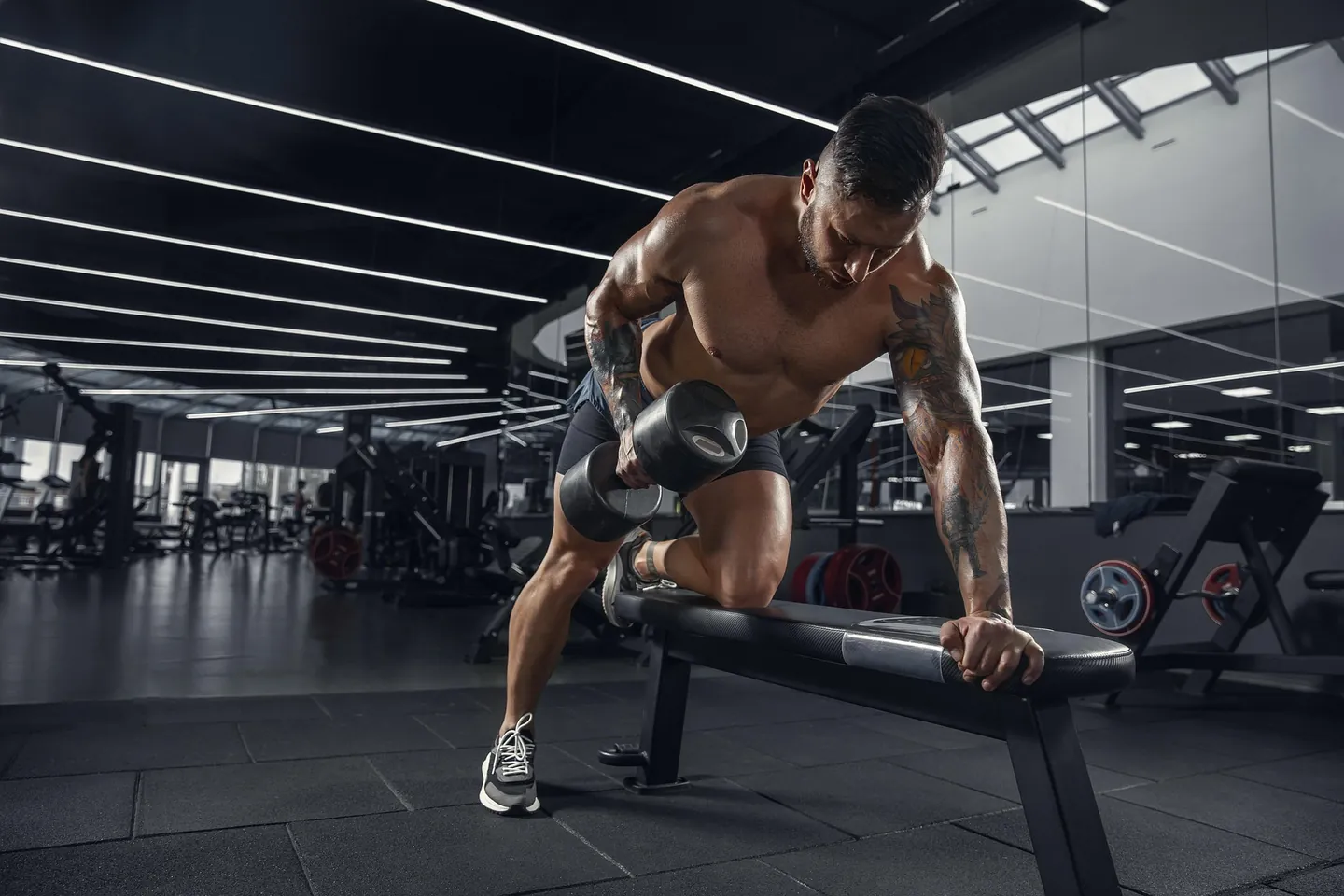
PPL is a split, not a progression scheme — it tells you what to train each day, not how to get stronger over time. You supply the progression, and the cleanest method is double progression:
- Pick a rep range for each exercise (say 6–8 for your main lift).
- Keep the weight the same until you hit the top of the range for all sets.
- Then add the smallest increment (2.5–5 lb) and drop back to the bottom of the range.
- Repeat. Climb the reps, then bump the weight, forever.
That’s it — progressive overload applied set by set. Log every session so you know last week’s numbers, because beating them is the entire game.
Common mistakes
- Jumping straight to 6 days. The high-frequency version is for people whose recovery and consistency are already dialed in. Start at 3–4 and earn the volume.
- Treating it as a split with no progression. If you don’t track and beat your numbers, PPL is just a way to organize junk volume. The overload is what grows you.
- Skipping legs. The most-skipped day. The split only balances if you run all three.
- All volume, no heavy work. Lead each day with a heavy compound in the 6–8 range, or you leave strength on the table.
- No deload. On a 6-day rotation, fatigue accumulates fast — pull back the volume every 6–8 weeks.
Who PPL is for
PPL suits late-beginner and intermediate lifters who want a hypertrophy-focused split that scales with their schedule. If you’re a true beginner still adding weight every session, a full-body linear program like StrongLifts 5×5 will grow you faster — come to PPL when that stalls. If you’re weighing PPL against an upper/lower power-hypertrophy approach, see PHUL vs PPL.
Common questions
Is PPL good for beginners? PPL works for late-beginner and intermediate lifters, especially the 3-day version. True beginners usually progress faster on a full-body linear program like StrongLifts 5x5 and can switch to PPL once that stalls.
How many days a week should I run PPL? Three days hits each muscle once a week and is easy to recover from; six days (PPLPPL) hits each muscle twice for more volume. Start at 3–4 days and add frequency only once that feels easy.
How Massiv handles this for you
PPL’s weak spot is that the split itself gives you no progression — you have to track every lift and manage double progression by hand across three rotating sessions. Massiv ships PPL as a built-in program and runs that for you: it remembers last session’s numbers, tells you when you’ve earned a weight bump, shows today’s working sets with the plates to load, and times your rest. You just train push, pull or legs — the app keeps the overload moving.
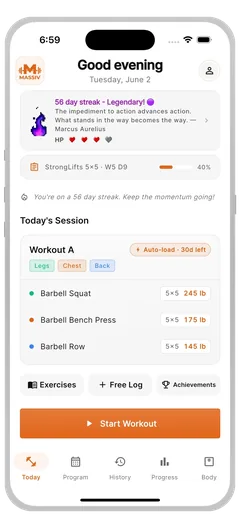
Massiv runs PPL's progression for you, session after session. Download Massiv and put it to work in the gym.
Download Massiv →Push/Pull/Legs endures because it’s simple and it scales. Group by movement, lead with a heavy compound, chase your numbers with double progression, and don’t skip legs. Do that honestly and the split will carry you for years.