 MASSIV
The Best Apple Watch Lifting App in 2026
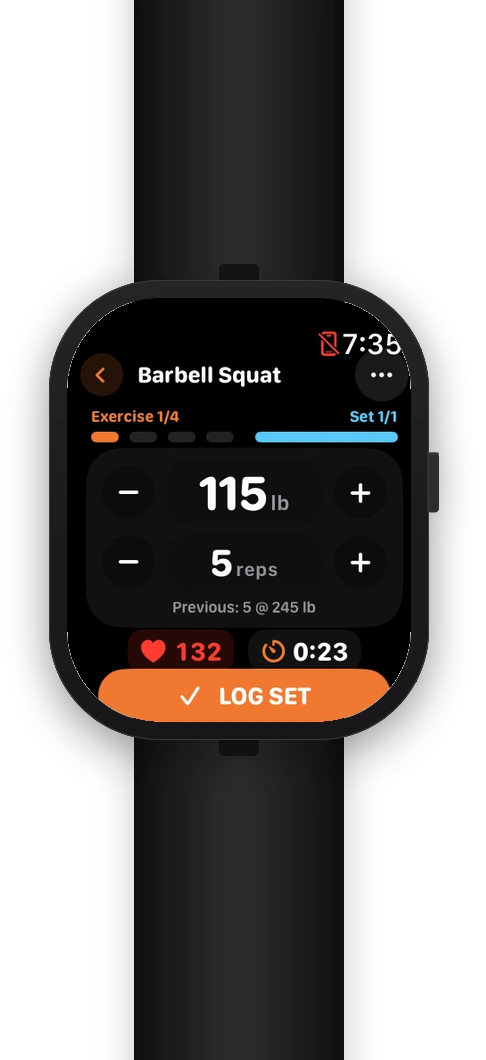
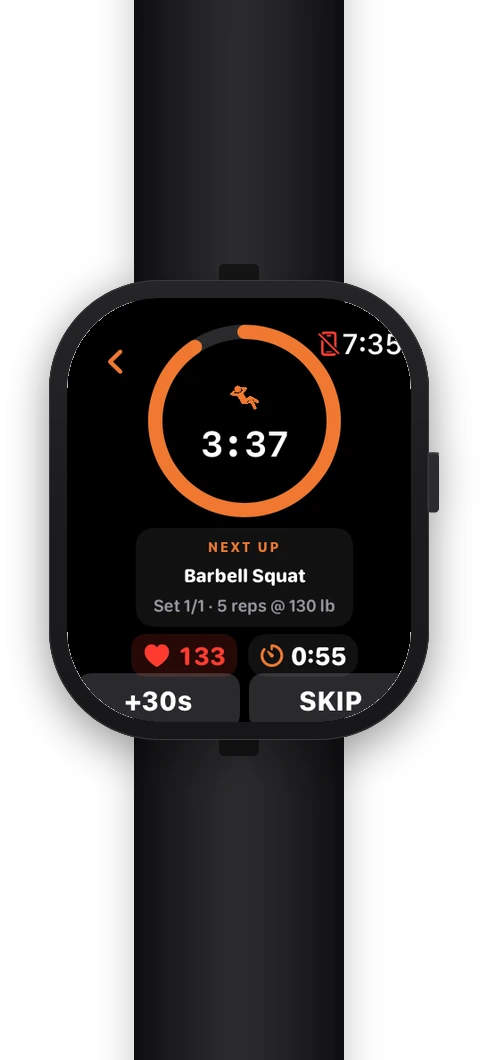
A real Apple Watch lifting app lets you log a full set — weight, reps, next target — and run your rest timer without touching your phone. Most apps that claim watch support only offer a start button and a heart-rate readout. Massiv logs from the wrist with Digital Crown input and a haptic rest timer, and watch logging is included free.
Lifting is the one workout the Apple Watch was slowest to handle well. It's brilliant for running and cycling, but for weight training most apps treat the watch as an afterthought — a heart-rate strap that shows "Functional Strength Training" and not much else. That gap is why "supports Apple Watch" tells you almost nothing on its own. Here's what actually matters between sets on the wrist, what is only a checkbox on a feature list, and the one test that separates the two.
What makes a watch app good for lifting
Most apps claim "Apple Watch support." The ones worth using have these specific things:
- Standalone set logging — mark a set done, log reps and weight, advance to the next set, all on the watch. Not just a workout-start button that defers everything to the phone.
- A wrist rest timer with a haptic alert — the single most useful watch feature for lifting. A tap on your wrist when it's time for the next set means you never stare at a phone counting down.
- Rotary-crown (Digital Crown) input — adjusting reps or weight by spinning the crown is far faster than tapping tiny +/− buttons with sweaty fingers.
- Today's plan on the watch — seeing your target weight and reps for the next set without pulling out your phone.
- Reliable phone sync — sets logged on the watch should appear on the phone without a fight.
- HealthKit integration — workouts and calories written to Apple Health and your activity rings.
What to skip
Some "watch features" sound good and don't matter much for lifting:
- Continuous heart rate as a headline feature. It's fine to record, but HR isn't very actionable during heavy resistance training — don't choose an app for it.
- Auto rep-counting from wrist motion. Sounds magical, works inconsistently across exercises. Manual logging with crown input is faster and more accurate.
- A watch app that's just a timer. If it can't log your sets or show your plan, it's not really a lifting app on the wrist — it's a stopwatch.
Why the wrist matters specifically for lifting
Strength programs live and die on rest periods. Heavy sets need 2–5 minutes between them, and that's exactly when it's tempting to pick up your phone and lose ten minutes to a notification. A watch that buzzes when your rest is up — and lets you log the set you just did with a spin of the crown — keeps you in the session and gets you home faster. The longer your rest periods (think 5/3/1 or any strength-focused plan), the more a good wrist workflow is worth.
How to choose
Try this quick test on any app claiming watch support: can you start a workout, log a full set, and start your rest timer without touching your phone? If yes, it's a real Apple Watch lifting app. If it makes you reach for the phone for anything beyond glancing at a timer, it isn't — no matter what the store listing says. Also confirm it writes to Apple Health if your activity rings matter to you, and that watch-logged sets sync cleanly back to the phone.
How Massiv handles this for you
Massiv treats the watch as a first-class place to train, not a companion gadget: you can log sets, adjust reps and weight with the Digital Crown, see your next target, and run a rest timer with a haptic alert — standalone on your wrist — while everything syncs back to your phone and Apple Health. Because Massiv also runs your program's progression, the watch shows the right target for the next set, not a blank field to fill in.
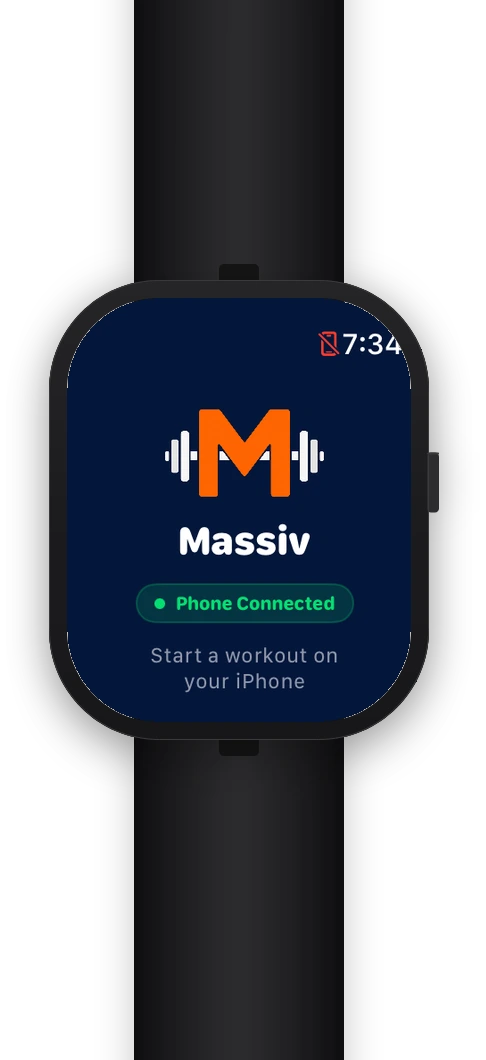
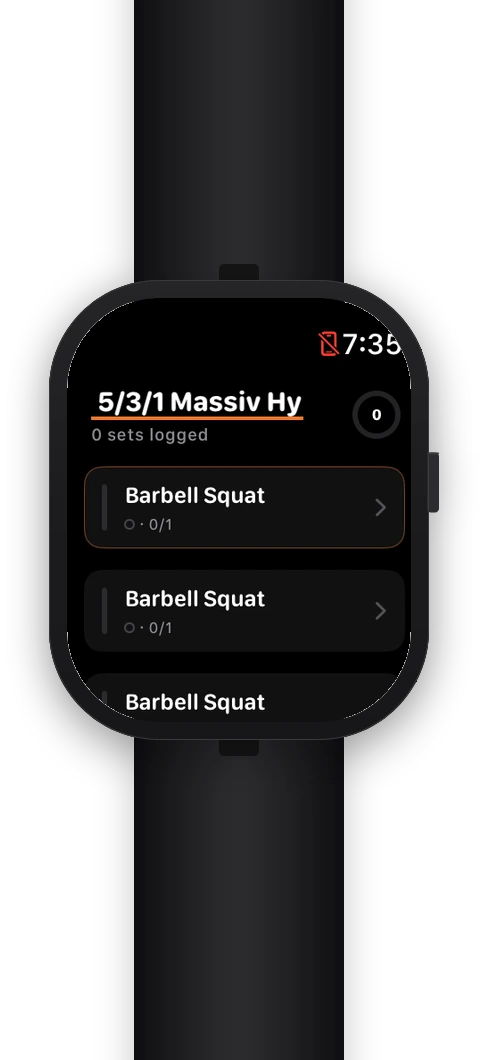
Massiv runs the progression math for this program automatically. Download Massiv and put it to work in the gym.
Download Massiv →The best Apple Watch lifting app is the one that lets your phone stay in your bag: log the set, spin the crown, feel the buzz when rest is up, repeat. Judge any app by that workflow — the rest is marketing.